Back to Notes
2026-04-29 CML CuratorCultural Textiles

Eastern European Elegance: Vintage Textiles in Roncesvalles Village
Eastern European Elegance: Vintage Textiles in Roncesvalles Village

The scent of smoked kielbasa and freshly baked paczki guides me down Roncesvalles Avenue, where Toronto's Eastern European heart beats strongest. I'm not here for the pierogi today—though the thought of Mrs. Baczynski's potato-filled dumplings already makes my mouth water—but for the textiles that tell quieter, equally profound stories.

**A Thread Through Time**

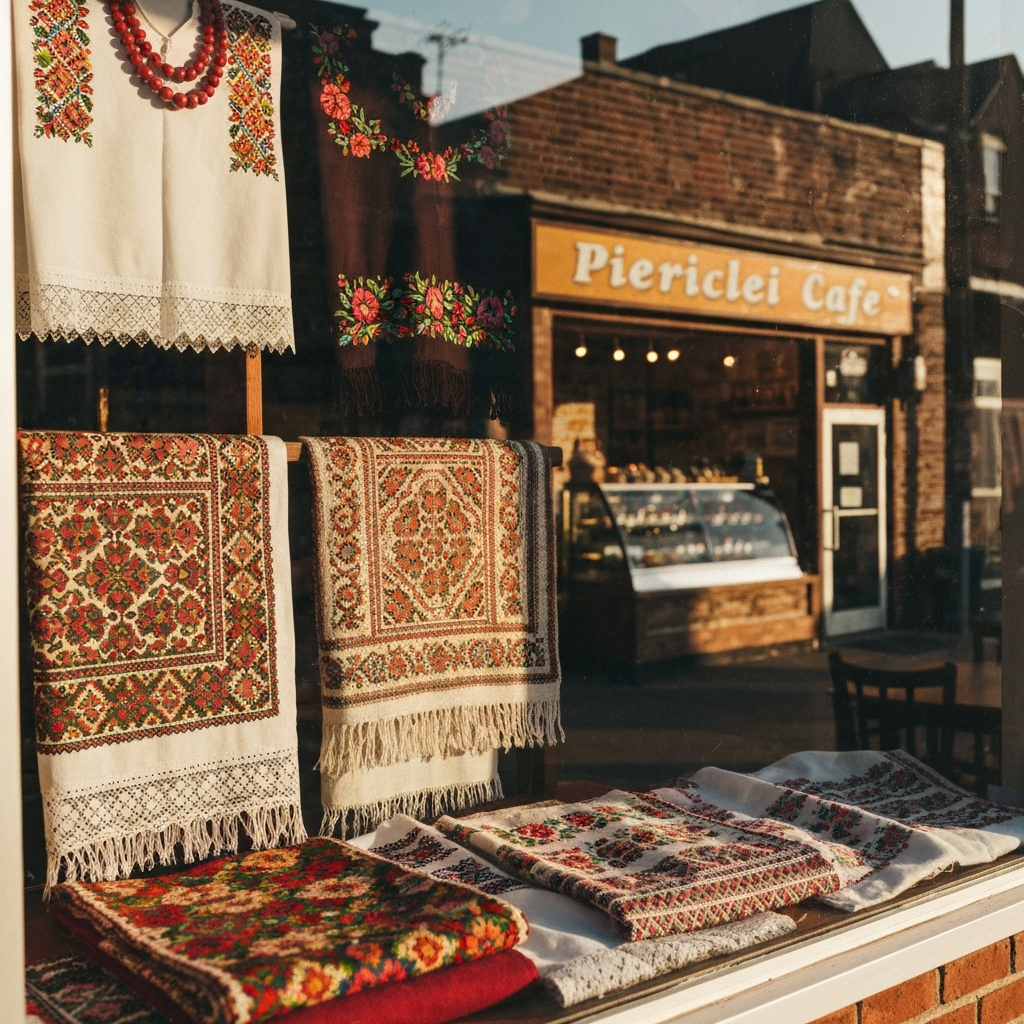
In the window of a vintage shop nestled between a Polish bakery and Hungarian butcher, I spot it: a traditional łowicki-style vest embroidered with vibrant floral motifs. The wool feels substantial, the embroidery precise—each stitch placed by hands that likely learned the pattern from generations before. This isn't just clothing; it's cultural memory woven into fabric.

Roncesvalles Village has always been Toronto's gateway to Eastern Europe. Since the late 19th century, Polish, Ukrainian, Hungarian, and Czech immigrants brought more than recipes—they brought textile traditions that transformed Toronto's cultural landscape. The vintage textiles found here today carry the imprint of these journeys.

**The Language of Embroidery**

Every Eastern European textile speaks a visual language. Ukrainian vyshyvankas tell family stories through symbolic patterns: oak leaves for strength, hops for prosperity. Hungarian Matyó embroidery bursts with riotous floral designs, each color holding meaning. Polish folk costumes vary by region—the krakowski patterns of the south differ dramatically from the kurpie traditions of the northeast.

What fascinates me most is how these traditions adapted in Canada. I examine a 1970s blouse with traditional embroidery but modern cut—the diaspora maintaining cultural identity while embracing new aesthetics. This blending speaks to the immigrant experience itself: holding onto roots while putting down new ones.

**Textiles as Time Machines**

In a basement archive, I uncover a treasure: a Lithuanian linen tablecloth brought to Canada in 1948. The owner's granddaughter tells me it traveled in a wooden trunk, wrapped around family photographs. Every stain and repair tells a story—the red wine spill from a wedding, the careful darning after decades of use. This textile witnessed celebrations, losses, and the slow process of building new lives in a new land.

These fabrics function as time machines. A Hungarian peasant apron from the 1930s, worn thin at the ties, evokes women working fields before war displaced them. A Polish wool coat from the 1950s, tailored in Toronto but following Warsaw fashion, speaks of maintaining dignity amid displacement.

**The Pierogi Connection**

I break for lunch at a basement café where elderly women still fold pierogi by hand. The owner, Anya, shows me her babcia's embroidered apron displayed behind glass. "She wore this every Sunday making pierogi for our family," she says. "When we left Ukraine, this was one of three things she brought."

The connection between food and textiles runs deep here. Both represent comfort, heritage, and the tangible pieces of culture immigrants carried across oceans. Just as recipes adapted to Canadian ingredients, textile patterns sometimes incorporated maple leaves or Toronto landmarks into traditional designs—cultural fusion expressed through thread.

**Preserving the Legacy**

Today, younger generations are rediscovering these textiles. I meet Maya, a third-generation Polish-Canadian who collects vintage embroidered blouses. "My grandmother had a trunk full of these," she says, examining a 1960s top with delicate redwork. "I didn't appreciate them then, but now I understand they're our family's storybook."

Contemporary designers also draw inspiration from these traditions. At a local boutique, I find modern dresses incorporating traditional embroidery patterns—old motifs finding new life. This cyclical revival ensures these textile traditions don't become museum pieces but living, evolving art forms.

**The Fabric of Community**

As evening falls on Roncesvalles, the golden hour light catches embroidered flowers in shop windows. These textiles form the neighborhood's invisible fabric—connecting past to present, old country to new. They remind us that immigration stories aren't just told in documents or buildings, but in the everyday objects people cherished enough to carry across oceans.

Next time you're in Roncesvalles Village, look beyond the pierogi (though definitely eat the pierogi). Seek out these textile treasures. Run your fingers over embroidered petals and woven patterns, and listen closely. You might just hear the whispers of generations who stitched their stories into cloth, ensuring they'd never be forgotten.

C
CML Curator
Heritage Curator